
Michelle Scott, urban fantasy author
Currently reading



A Fascinating Read

Once again, Lehane has created a gripping novel with compelling characters and a plot that takes the reader on a breathless ride from page one to the very end. This novel was different from the others I'd read of his because it seemed more fanciful. However, it is also my favorite of his books so far. I'm not a fast reader, but I devoured the book in two days. And while I thought that I had some inkling on how the book might end, I was surprised. I highly recommend this gum-shoe mystery to anyone who enjoys detective novels.
Too Much Like the Second Book in the Series

The last book in the Lilith's Brood trilogy was not as exciting as I'd hoped. The first two books were very gripping, and I could not put them down. This one, however, was so much the same as the previous book in the series that I was almost bored. It was like I'd seen it all before, so it didn't have the intensity or novelty to keep me interested. Butler is a fantastic writer, and her prose is a joy, but without a compelling story, pretty writing just isn't enough. What I wanted was something new instead of the same world she'd been writing about for the past two books. If she'd finished the series with a book on the humans' colony on Mars instead of yet another book about the alien colonies on Earth, I would have been far more interested. Again, this wasn't a bad book; it was just redundant.
 First, let me be clear. I'm a horror snob. Although I love horror, I am *very* picky. Too often, horror translates into gory, gratuitous brutality with a lot of smarmy sex thrown in. I've put down at least a dozen books half-read because the plot (if there was one) was hidden under layers of dreck.
Don't get me wrong, though. Frisch's Cure is graphic, bloody, and disturbing; not for the faint of heart. HOWEVER, it also knows not to cross the line. In my opinion, the best thing a horror author can do is make the reader squirm (instead of vomit), and this tension-filled novel made me squirm! Frisch has an amazing (and rare) ability to tie her reader in knots without offering too many disturbing details. Kudos to the author.
Now, having said that, I would have given the book 4 1/2 stars if half stars were allowed. That's because Cure offers precious little in way of buildup. The tension starts out at a nine and immediately bursts into a ten, making it difficult to raise the stakes. What you start with at the beginning is pretty much what you get at the end. The plot is straightforward with only one or maybe two surprises. The characters, too, remain very unknown throughout the book. They aren't cardboard so much as strangers that we never get to know.
Like I said, I'm a horror snob, and I prefer old school horror ala Stephen King who is a master of character building. The problem with a book like Cure is that because readers don't get close to the characters, what happens to them isn't as interesting as it could be. I was also confused about the Nixon Center (a research facility in the story) since on one hand, the place received a lot of negative attention from outsiders, yet the locals seemed perfectly okay with it, even when strange events started surrounding it. Finally, as I mentioned earlier, because the story immediately kick-starts, there's nowhere to go. After a while, the action becomes repetitive.
This, however, is more of a personal preference. I'm a patient reader who tolerates *a lot* of character development. Many readers (dare I say nowadays??) want pure action. If this is the case, then the book is for you. Even if this isn't the case, Cure is a strong horror story from a terrific author. I'll definitely be moving on to the other books in the series.
 There is something about novels set in lighthouses that I find fascinating, and Light Between Oceans is no exception. The setting, a remote island off the coast of Australia, is both paradise and prison. I left the book wanting to spend a week alone on Janus island just to know what it was like.
The story is beautifually written. The author doesn't clog her novel with wordy descriptions, yet she uses wonderful examples of methapor and figurative language. I felt strongly tied to the characters and their plight. In a way, this book reminded. Me of a Jodi Picault novel since it is filled with desperate people in desperate situations. It is all about people who want to do what's best. For their families without knowing what that something is. It was a truly gripping story that kept me interested throughout.
A couple of things, however, prervented this from being a five-star read. One was an annoying habit of the author to suddenly switch from past to present tense. I'm sure this was s literary device of some kind, but it Didn't work for me at all as I don't like prose that draws attention to itself. The sescond thing was that, about halfway through the book, I started to *hate* Izzy, the main character. The author tried to build sympathy for her, but I wasn't buying it. I became so angry, in fact, that I wished she would throw herself into the ocean and put me out of my misery. There was some redemption for her at the end, but not much.
Overall, however, I really enjoyed this story. My favorite thing may be the title, A Light Between Oceans, because it is such a lovely metaphor for the novel.
 1
1
 This book started off with a bang. I was immediately drawn into the character, Harmony, a self-destructive teenager trying to keep herself together despite the ghost whose intent on ruining her life. The writing is tight and the plot gripping. I didn't quite like Harmony, but I understood her. I also liked her loyal friend, Brea, and her (unrealistically) decent boyfriend Adam. At the start, the book reminded me a lot of Chuck Wendig's Blackbird.
Halfway through, however, things change dramatically (no spoilers...sorry), and I got the feeling that I'd been cheated. This had a lot to do with what happens to the main character. However, it was also a matter of how the book changed from a ghost story into a strange mystery. Because all of the mystery's clues are embedded into the second half of the book, the plot has a disjointed feel - like the author took two story ideas and glued them together. It's not a bad fit, but it's not seamless, either.
Then, there were some significant changes in Brea's personality. The decisions she made in the end of the book confused me because they seemed so out of character for her. In fact, there were a lot of strange 'twists' in the end that left me scratching my head.
I might have given this book three stars if not for the terrific writing and intriguing plot. I will definitely keep this author in mind again.
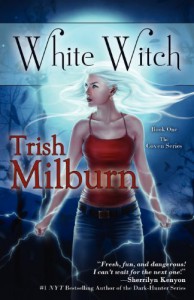 Not gonna lie...this book was too simply to YA for me. There are certain young adult books and series that I *love*, but this wasn't one of them. It's not that the writing was poor (in fact, it was quite good), or that the characters were unlikeable; it was the ooey-gooey romance that dominated the story. The first half of the book is primarily about girl meets boy, both fall instantly in love, and make goo-goo eyes at each other. Because of this, I nearly set the book down.
I'm glad that I didn't, though because in the second half of the story, the action (and paranormal stuff) finally kicked in. The second half was quite gripping.
Still, a few things didn't set right with me including the cast of stereotypical characters: gorgeous heroine who has no idea how gorgeous she is; crazy, colorful best friend; moody, mysterious bf; cute, zany guy friend...it was like watching a John Hughes movie. Not bad if that's what you want in a book, but this middle-aged reader wasn't into it. I also questioned a lot of why Jax (the main female character) was able to run away from her father's cruel coven, not to mention why the coven was cruel in the first place. True, they were vicious towards their own coven members, but it wasn't clear why they were cruel to human beings at large. Finally, there were a lot, and I mean a lot, of loose ends at the end of the story.
If it sounds like I hated this book, I didn't. Like I said, the writing was solid; and although the plot dragged for the first 50%, the end was quite exciting. I just think its a book better read by younger readers than myself.
 The concept in this story was very good, and I found myself hooked from the start. The hard-boiled detective language was amusing but appropriate. The writing was solid, and the narrator easy to relate to.
Since this 'book' is either a long short story or a short novella, events move very rapidly, and the character development is limited. These aren't bad things, obviously, but I was left wanting more. The part I disliked the most was that the plot was so straightforward and predictable that I knew midway through how things would turn out.
Although this is a fun, action-packed story, it offers no surprises.
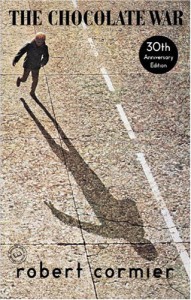 As much as I enjoyed this tale about a young man who stands up to the hazing in his private school, I found myself wondering if the book is outdated.
The Chocolate War came out in the early 1970's during a time when the Hippie culture was gaining momentum and many young people were questioning mainstream morality. In essence, the story is about the individual standing up against tradition and society. Jerry shows a lot of courage and endures many hardships, but finds his individuality too important to give up.
It is very difficult for me to envision a group of teenagers in 2013 who would, to a person, follow a silly school directive like selling chocolates. In fact, the concept is absurd. From my experiences teaching and raising teens of my own, I simply can't imagine a school that would be able to mandate complete conformity the way this school did. I don't think that readers today would be able to identify with that, either.
Despite this, I found The Chocolate War to be a compelling read. No doubt, it must have quite controversal when it came out due to its language and blunt recognition of teenage sexuality. The characters are compelling, and the situation - while a little absurd - did draw me into the book.
 Lately, I've been re-reading books that I had read as a teen, and I'm happy to say that thirty years later, I still love this book. The amazing thing (to me) is that House of Stairs is just as current today as it was back then. It is set in an unspecified, futuristic setting, yet now its seems very contemporary.
House of Stairs, like the Hunger Games series, is a story in which teens are pitted against teens. HoS is much simpler than HG, both in terms of setting and plot, but the four characters are very interesting as are the choices they make. This book says a lot about the human condition and reminds me of the themes in other books such as Lord of the Flies and the Butterfly Revolution (another great dystopian story about teens).
William Sleator's book was my first experience in dystopia, and I still love the genre. What surprised me, however, was that even though this book was supposedly written for 9 - 12 year olds, the author used *a lot* of cursing, and much of the scientific jargon towards the end would be very confusing. Even thought this is a short, simple read, I'd say it would be better for high school students.
All in all, I highly recommend this book.
 I actually saw the movie before reading the book, so unfortunately, I knew where the plot was headed. Even so, the book was every bit as gripping as the movie. I'm not one of those purists who get angry because things in the movie don't match up exactly with things in the book (in fact, I barely remember the details of the movie...only the ending), so I wasn't troubled by any discrepancies. However, others who are purists may be bothered.
The narrative style of this book is probably not for every one. It's written in first person with a very helter-skelter style, but I loved that. The jagged, off-beat narrative was a perfect voice to use for this frenetic, depressing plot.
To say the story is gritty is like saying the public bathrooms in a city bus station are gritty. No big surprise there. But what did surprise me was the depth of insight. Even as a middle-aged woman, I could relate to some of the things in this book that seemed to be written with disillusioned, young men in mind. Like I said, the entire thing was gripping.
The plot itself is, of course, so overblown as to be ridiculous (as if this could ever happen), but again, it put me in a certain mood. I was engulfed in it the way I am engulfed by dystopian fiction. It all seemed right somehow. Sick, but right.
This book isn't for everyone, but I loved it.
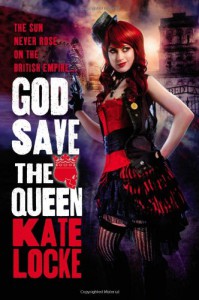 I almost gave up on this book in the first chapter when I realized that there was no real steampunk element to this novel. Although the cover screams steampunk, the setting is modern day. The only difference is that modern-day inventions (cell phones, computers, etc.) are sometimes given odd and confusing names (and then again, sometimes not). So when I realized that this wasn't steampunk, I felt cheated. I'd wanted Soulless, but I'd gotten the Hallows.
Luckily, I read on. Although the pseudo-steampunk setting continued to annoy me up until the very last chapter, everything else was terrific. This book is an urban fantasy murder mystery with a very clever plot. It was well-written and kept me turning pages to the very end. I did kind of guess the end of the book, but still enjoyed the buildup to the final chapter.
Xandra, the heroine, is someone to reckon with. She's tough but never annoying, and the man in her life is a genuine character and not a cardboard one. At times, the dialogue got a bit silly (can a British novel be *too* British?), but for the most part, the characters and the plot fell together well. The addition of the aristocracy put another spin on what might have been a tired, old theme.
I'll say it again, though. I just *hated* the way the book tried to be something it wasn't when it comes to steampunk. True, the story involves Queen Victoria (who is a vampire herself and still sits on the throne in the twenty-first century), but it seemed completely unnecessary to fall back on silly names for modern devices. Not only that, I was sick to death of the heroine and her long evening gowns, corsets, and the men in their cravats.
Other than that, this was a terrific book, and I look forward to reading about Xandra's next adventure.
 As with the first book in this series, Butler creates a world that is both alien and familiar. Akin, the hero of the story, has a human mother and an Oankali father which makes him able to sympathize with both cultures. Unfortunately, he is too human to live among the aliens, but too alien to feel comfortable with the humans.
This book is compelling, but difficult to understand if you have not read the first book in the series. The names alone are a challenge. However, it is worth the effort. Butler has many terrific insights into human nature. She also creates a lot of sympathy for the human/alien hybrid, Akin.
If you have never read a Butler book before, I would recommend beginning with the first book in the series; however, even if you are not a huge fan of science fiction, you might enjoy this book since it is more about culture than about technology.
 Thirty years ago, when I read this book back in high school, I focused only on the horror of the sinister stranger, Wissey Jones, who wanted to buy Barry Rudd. As an adult, however, I see a deeper horror at work.
The story, told in the format of a court transcript, is a quick, easy read. However, the themes - the shortcomings of the educational system of the US, television's corruption of society, and peoples' blind belief in the need for national security - will stick with me for a long time. The tragedy is not just that Mr. Jones wants to buy a child; it's that he has the support of so many people. Barry - the precious ten-year-old - is stuck in the middle, left without a voice or a choice in the matter.
The character development in this book is fascinating. Decent characters become indecent while sketchy characters show a strong core. Also, despite the fact that this book was written in 1960, it has a great deal to say about 2013. In fact, I was amazed (and saddened) by the similarities of politics now and then.
On its surface, this book is simple, but it goes much, much deeper. I highly recommend this classic.
 Good girl Emily thinks that taking a job as a 900 number operator is the most daring thing she's ever done. Then one of her clients ends up dead, and she thinks its up to her to find the killer.
I'd rather give this book 3 1/2 stars than four, but no way could I give it only three stars. The book was fun, silly, and totally girly. In fact, it reminded me of Caprice Crane and other of my favorite chick lit authors. Emily, the main character, was immensely likeable and easy to relate to, and her friends were also well written. The prose was smooth and the plot moved at just the right pace - not too slow, not too fast. I also loved the Florida setting. I know that a few FL natives mentioned some nits with the location, but for me (a native Michigander), it was very convincing. And considering this is a story about a phone sex operator, the author managed to keep everything to a PG-13 rating. All of these things made the book a cute, easy read.
Unfortunately, there were some things that troubled me quite a bit. The first was the romance. The love interest was just too perfect. Too cute, too understanding, and way too forgiving considering what Emily puts him through. The leading man lacked depth and personality. Another thing that bothered me was that there were too many coincidences, especially at the beginning and end of the story. I found myself thinking, "Really??" when Emily just happened to be at the wrong place at the right time. Finally, although I understand that these kinds of books need to be zany, a lot of Emily's antics were too outrageous to be believed. She poses as a number of people in order to dig up information on the murder, yet no one ever questions her credentials, nor does she get into trouble for impeding an ongoing investigation. This really bothered me.
Phone Kitten did have its flaws, but it was enough of a good read for me to enjoy it from start to end. I think this is the author's first novel. If so, I hope she'll put out others.
 I think I may be at that point where I've read so many UF books that I'm starting to get bored with the same old same old UF themes. The bitchy, , mouthy, kick a$$ heroine. The mysterious, somewhat dull, love interest. Endless fighting between the were creatures and the vampires, and the humans against all of them. It wasn't that this was a bad book; it's just that I felt I'd read it before. Several times, in fact.
A few things bugged me in particular. The heroine was mouthy and brash in the extreme. Yes, she had a terrible childhood, but - to me - she acted like a pain in the butt teenager. This feeling was compounded by the fact that nearly everyone referred to her as 'little girl' or 'little warrior' or 'little whatever'. Right away, I was rolling my eyes at her. And although the story did get much better later on, I nearly stopped reading after the first chapter.
Another trouble spot was the extreme child abuse. Yes, it was a part of the heroine's past and kind of happened off camera, but still. I didn't think Kit's childhood needed to be *that* horrific. Finally, there was the 'romance' which came off as weird to me. (WARNING: SPOILER ALERT) Kit never really fell in love, but she still allowed herself to be marked by the were creature and become his partner? That didn't seem at all right.
To me, this is was an average UF. No surprises, nothing new. Not bad, but not great, either.
 I've heard that this is the author's first novel, and that makes sense to me because it reads like a first novel. That is, it's too much. Too gritty, too dark, too predictable.
I do occasionally enjoy dark, gritty books (such as [b:Generation Loss|102880|Generation Loss|Elizabeth Hand|http://d.gr-assets.com/books/1171487707s/102880.jpg|3354351] by Elizabeth Hand), but there's a point at which I lose patience with a novel's increasing depravity. In Sharp Objects, everyone and everything is so horrible it simply cannot be believed. By the end of the book (which I guessed early one), I was rolling my eyes.
Camille, the protagonist, wasn't my favorite character, either. I first I thought she was simply spoiled and whiny ("Boo hoo...I'm so rich and my mother doesn't love me..."), then I came to like - or at least tolerate - her when more of her history was revealed. But then I went back to loathing her. I'm sorry, but when someone insists on destroying herself and her relationships, I give up.
Most of the other characters were walking cliches. Mean girls who grew up into mean women. Fat, ugly girls who end up as miserable losers. Small towns that are petty and in which everyone leads a life of quiet desperation... Every cliche that ever existed ends up in this book.
Despite all of that, however, there are moments of genius. The setting (Missouri) was wonderfully rendered and very realistic. The book remained a page-turner (even though I guessed the ending early on). And the book was creepy. Really, really creepy.
I've heard better things about Flynn's other books, and I do plan on reading her later works.